Sabor Ilonggo

Ang mga manamit sa Iloilo.

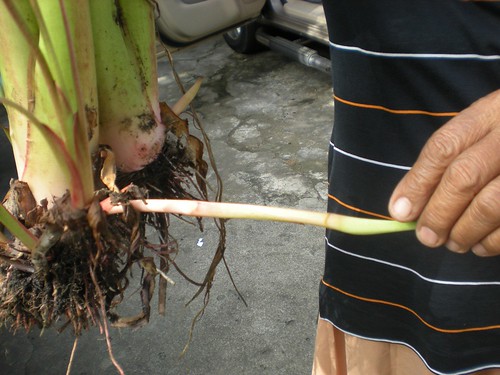
It's with an "A" so this is different from ubod but "technically" the same. Confused? Well ubod is the pith or the center of a coconut tree while ubad is the pith of a banana tree. To have an ubad means a whole banana tree has been cut down and stripped to bare its center. So goodbye to banana fruit, leaves and heart.
To prepare an ubad for cooking, first thinly slice, around half a centimeter, the cleaned pith (must be very white and sized like a fluorescent lamp to be sure of the quality.) . Then using a barbecue stick, remove web like fibers "interconnecting" these slices (these are actually "hardened" banana sap). When finished you can crush is into smaller pieces and add to your cooking.Ubad is mostly used as extender to the usual meat and vegetable dishes, the most famous of which is the ubad-kadyos-chicken combination. Another dish that goes well with ubad is the usual ginisang monggo. With pieces of pork or chicken and malunggay as "greens", it'll surely be an appetizing and healthy eat.

Panaderia de Molo

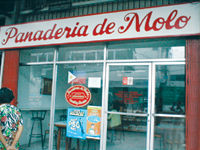
Panaderia de Molo is more than just a bakeshop. Its name is embedded in the history of Iloilo, making it a witness to some of the most important events in the Molo district. Dr. Kristine Sanson-Treñas, the fourth generation owner of Panaderia de Molo, tells the colorful story of this antediluvian bakeshop.

Panaderia de Molo

In the later part of the 19th century, five spinsters put up Panaderia de Molo whose sole heir was Dr. Treñas’ grandmother. “My great grandmothers might have started formulating things during their idle times in the afternoon,” Dr. Kristine reveals the conception of the bakeshop.

History would tell us that in the 1800’s, the masons would use egg whites to cement the bricks of the walls of the churches they were building. So as not to waste the rest of the egg, women would make cookies out of them. When women gave birth to that idea, Panaderia de Molo was also born. Although we cannot deny the fact that most of what we see in the panaderia has a lot of Spanish flavor to them (with the recipes having been handed down by Spaniards to the women during the Spanish colonization) we can still consider these creations as somehow Ilonggo originals since it was the Ilonggas who molded, baked and made them popular. For something whose popularity retains for more than a century, it must really be very special, for even songs sometimes fade away with time.

Panaderia de Molo has three branches in Iloilo City. The original bakeshop used to be in the Sanson’s ancestral house in Molo, Years ago, the family decided to move it to a street side area where it is more convenient for clients. The other two branches can be found in Jaro and Rizal St. fronting the University of Iloilo. Galletas is considered one of Panaderia de Molo’s best sellers. It has the kind of taste that makes you want more and more of it. Read more

Article and photos courtesy of

Text and photos by Jinki Beldia
The News Today


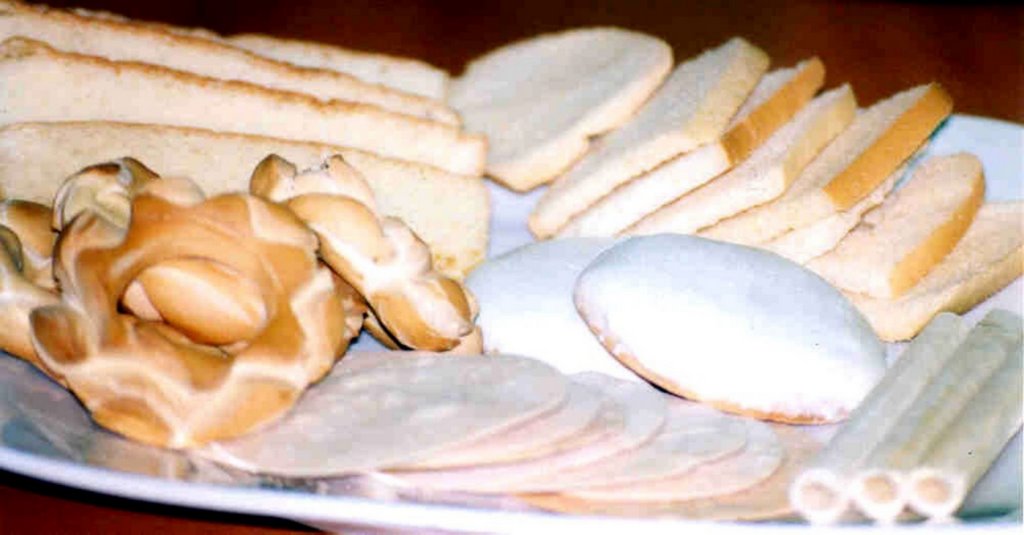
Clockwise, from topmost right: kinihad, bañadas, barquillos, galletas, kinamonsil, biscocho prinsipe
Panaderia de Molo's assorted biscuits are packaged in either the tin round cans or in small boxes, with the various biscuits packed in individual plastic packs.

Kinihad are thin slices of toasted bread, great for dipping into coffee or hot chocolate, and would benefit greatly from a spread of sweet jam and butter. They are like biscochos without the baked in butter and sugar on top.
Bañadas are soft round cookies glazed with sugar icing, which reminds me of something similar in Pangasinan, and which made the late food doyen Doreen Fernandez wax sentimental over the local bakery treats in her hometown of Silay City.

Of course who doesn't know barquillos, called apas elsewhere (but is different from the thin apas of the Tagalog region), the long tubes of rolled wafer-thin biscuits of our childhood that have evolved into the present chocolate-marbled and -filled Stikkos? This barquillo was coconut-flavored, and it was delicious without cloyingly sweet. It ranks among my other barquillo favorites - the ube and pandan flavored ones from Biscocho Hauz, also in Iloilo City.
Panaderia de Molo

Panaderia de Molo's galletas are one of a kind - not like the dry, chalky Luzon galletas that are choking hazards - they are crispy, thin as an unrolled barquillo, and more like a crunchy communion host. Very close to the apas of the Southern Tagalog region, but with the characteristic chalky taste.

Kinamonsil ape the shape of a kamonsil or camachile (Pithecellobium dulce, known among international tropical plant enthusiasts as Manila Tamarind) with its decorative form. I rather like my province's own camachile biscuit, though, as i t is not as hard and sweeter.

The one I like best among the lot, besides the hojaldres and are akin to otap but are not as flaky and softer, are easily the biscocho prinsipe. I like Ilonggo biscocho (and not the Ilocano biscocho), but I love biscocho prinsipe. The qualification prinsipe (prince) is a deserving adjective - it is indeed a royal biscuit. It isn't even a biscocho, it is more like a slice of dried butter pound cake - crumbly, buttery sweet, finger-licking good. It needs nothing else. Read more ...

Photo and article courtesy of
Bucaio | Tinapay: Iloilo Delicacies By Way of Bacolod

Chicken soups are among the most well loved recipes anywhere in the world. And here in Western Visayas, among the most popular chicken soups is chicken binakol. Basically, it's chicken and vegetables stewed in coconut juice. The juice (and also meat) from the coconut makes this soup distinct from other chicken soups for it has a tinge of sweetness fcoming rom those ingredients.Usually, native chicken is used when cooking chicken binakol because of it's distinct flavour. It is cut into pieces then placed in bamboo tubes together with coconut juice and meat, tomatoes, onions, garlic, bell peppers and salt. The recipe varies for some add ginger (can't get over the tinola recipe?), lemon grass, potatoes and more.


Then the bamboo tube is sealed and placed over fire and wait for it to boil. This is where it got it's name - for binakol is a Kiniray-a term for cooking inside a bamboo tube. Others say it roots from the Hiligaynon word bakol, meaning "to spank", believing that the chicken is literally spanked before it is cooked to get more flavour.Though it is a hassle cooking inside bamboo tubes, to get the same essence one can just cook it in pots with bamboo tubes to get the same aroma and flavour as cooking it binakol, literally. Ofcourse, bamboo tubes reuiqred would those fresh ones and not those from the chairs, sala set and even house posts or you'll end up chicken binakol with the essence of varnish - lol.

The gabi (taro) is just one of those plants which is edible from "roots to tops". The most popular of which is the tuber part which is used in a variety of dishes and mostly in combination with coconut milk. Its leaves, of course, is the main ingredient of a Bicol specialty, laing. It is dried then chopped and sauteed with other ingredients including, again, coconut milk.
Then there is takway. The local term for its tendrils/runner, that part which is torn between being a stem or a root for it neither grows upwards nor downwards - it grows sideways. Scraped off of its outer skin, takway is often a key ingredient in vegetable dishes like laswa and with gabi in coconut milk and local snails know as bago-ngon. It is also popular when cooked adobo style with guinamos, the local bago-ong.
It is very popular in the region that even big supermarkets sell takway in style - cleaned and plastic wrapped in styro with some additions to make it easier to prepare.

Named after one of Iloilo City’s districts, Pancit Molo is one of the more identifiable pancit dishes in the country. It stands out uniquely among the noodle dishes mainly because of its non-traditional pancit look. It is a derivative of the Chinese wonton (filled dumplings) made into a soup.
Pancit Molo’s origins must also have been the same time that the concept of Cantonese Chinese dim sum, linked to the Chinese tradition of drinking tea or yum cha, started in the country. The Chinese traders journeying through their trade routes would probably makes stops at tea house to rest and snack on light dim sum items – noodles, dumplings, soups and little cakes.
Thus it came to be that the favored stop at the time was probably Iloilo, particularly the quiet little town of Molo (know as Parian then), where enterprising Chinese businessmen probably decided to settle and set up little tea houses to cater to Chinese customers. Over time, intermarriages between Chinese and Filipinos eventually fused the two cultures, which resulted in a fusion of traditions and lifestyles now deeply embedded in our culture, and particularly evident in our local cooking.

What makes the pancit Molo different from fro mall the other pancit dishes is that the Molo wrapper used to wrap the filling is not cut into thin noodle strips but is a rolled square sheet of pasta dough used to encase the ground meat filling. Just like the Italian ravioli or tortellini which hare classified as pasta, pancit Molo, by virtue of its wonton wrapper is classified as a noodle.

The filled dumplings used for this soup often use ingredients such a ground pork, chicken and/or shrimps that are mixed together with vegetables like garlic, onions, carrots, leeks (or chives or even that aromatic and flavourful kutsay), parsley or coriander. Other recipes mention the addition of other ingredients such as tajure (fermented soy bean mash), minced Chinese ham, chopped Spanish chorizos (sausages) and water chestnuts or singkamas (jicama). The mixture is then bound with eggs and seasoned (usually with salt and pepper) before being wrapped individually in wheat of rice flour won ton wrappers.
Kutsay and tajure
The filling mixture is also similar to, if not the same as, the stuffing for fried lumpiang shanghai (another localized Filipino version of the Chinese spring roll). There are several ways to shape the dumplings depending on the recipe specification. One often encounters the following shapes – folded triangles, sio mai pouches known as wontons, or ravioli or tortellini shapes. These are then dropped in a boiling chicken broth where they are simmered until cooked (that is when these pouches float) and then ladled into bowls or soup tureens before being served.The broth on the other hand, often uses chicken as its base for preparing the stock in which dumplings, and sometimes cut up wonton wrappers, are cooked, It is then served with a garnish of fried garlic chips and minced chives, kutsay or coriander leaves.

Pancit Molo
can be a wonderful meryenda accompanied by biscocho (toasted bread) or galletas (thin round cookies) from another Molo icon – Panaderia de Molo. This soup dish easily complements plated meals, buffet menus or just even a simple homey meal. Pancit Molo though, unlike Lapaz batchoy, is more of a home made specialty even in Iloilo that there is no single restaurant that could claim it or even pride itself in having the best. Its recipe is not even standardized varies depending upon family traditions. Nonetheless it is one of the country’s better dishes, one that can certainly stand among the other soups, not only the Philippines but the world.

Article courtesy of
Food Magazine May 2006 issue

Bingkahan sa Mohon makes one of the most popular bingkas in Iloilo City. It has been one of my blog frustrations before not having a feature on them.I've tried many times before but I ended up with more frustrations - having no more bingkas left or my reserved order was given to others. It's not easy to get them since I live far from where they are located.But finally I ended this streak of bad luck; I got "tons" of bingka from Mohon and I loved it! What makes it delicious aside from the concoction is the amount of coconut strips in each of these small round bingkas. While others have microscopic amount, Mohon bingkas have more than enough that sometimes it feels like eating bucayo rather than bingka.
Sold for PhP 10 per pack of four, this quick fix will surely makes one crave for more and oftentimes come back and buy some more. Good thing I bought 5 packs that time, more than enough for me to savour every bite. With the heat coming from above one can expect these bingkas slight more brown on top and that makes it more appetizing.The inside reveals a gooey concoction of coconut strips with rice flour, milk, sugar and others. Some may have better concoction but these coconut strips makes Mohon bingkas stand out among the rest in Iloilo and perhaps almost an iconic status.

Built in the 70’s by Honorato Tiburan Espinosa, Tatoy’s started only as a nipa shack with three tables tucked in a corner across from the beach. Because he was a fisherman, Honorato (Tatoy) harness his knowledge if the sea to source only the best and freshest seafood for his customers – and prepared these with the honesty and simplicity of an instinctive cook. When the word of mouth spread, the place become deluged with customers, and Tatoy’s was on its way to becoming the venerable institution it now is, with a beach front property that includes an indoor dining room, an outdoor pavilion and a convention hall. Although eight of his nine children help in the restaurant (the other one runs a separate restaurant named Nes and Tats), Tatoy and his wife are still active in the day-to-day operations. Often he can be found wiping a table clean or even serving the customers himself.
Tatoy's specialty - native litsong manok, commands a high price for an open fire roasted chicken. For PhP300, one gets to enjoy a plate of this native Visayansstrain of chicken known as darag or just "Bisaya nga manok". And it's really worth it since you might never get to taste a litson manok anywhere else. offering is it's native litsong manok that tastes like no other.A personal favorite of mine are these grilled scallops. That time they were much bigger than those served at Breakthrough Restaurant, its main competitor but Tatoy's timpla is way better. It's "dabbed" calamansi-butter-garlic concoction that every scallop makes you even want to have more. A plate costs PhP170 - that's around 20 pesos for each succulent scallop but it's totally worth it.
Tatoy's grilled bangus is among the best I've tasted since it sort is prepared inasal style. Check out the color of the fish and you'll know instantly. Served boneless and most of the time in large size, the bangus can be eaten on it's own because of it's already tasty timpla. No need to dip it in sinamak or that toyo-calamansi-sili concoction. No wonder it costs aroudn PhP240up depending on the weight.
And lastly a bowl of fish soup (either tail or head) provides a perfect sabaw during any meal at Tatoy's. And these meals always turns up into special meals for one is served with the best and freshest produce this famous Iloilo restaurant has done for some many years that Tatoy's has become such an icon to the locals and tourists alike.
Italicized text coustesy of the article entitled
TRUE TALES OF FOOD NIRVANA
by Norma Chikiamco
for FOOD Magazine August 2007 issue

The famous La Paz batchoy is a concoction of noodles, pork, liver and innards in broth topped with chicharon, garlic and chives. Among the popular batchoyans in town is Ted's Oldtimer who is credited to be the innovator of La Paz batchoy as it is known today throughout the country. Among the innovations they introduced are batchoys using different kinds of noodles which one can decide upon ordering in their stores. The original and default order is made with these yellow egg noodles known as meke. With a hint of saltiness, these noodles have been chosen as the original maybe it is among the least expensive during those days. Also the noodles compliment the taste and the color of the other ingredients making it pleasing to the eyes. And usually this noodles makes the perfect presentation of the batchoy as it holds firmly the other ingredients that makes the signature mound on a batchoy bowl. Sad to say that the new deep bowls being used now in some branches makes it impossible to have a good visual presentation of La paz batchoy.
The next one I've tried is the miswa version. When my order came, I though I was served with a bowl of caldo (broth) for I can only see the broth. Later when I dipped my spoon and scooped what was hidden underneath, then I saw everything. Same amount of ingredients and toppings just lost in the broth because the miswa cannot hold it and it becomes soggy after sometime. It sort of like eating a soup with meat as one barely gets to "bite" the miswa.
And my latest is their bihon batchoy, which is a cross between the previous two. Mild in taste that it enhances the flavour more but like miswa the batchoy is "lost in presentation". It came in a deep bowl plus the noodles sink to the bottom bringing the others so it was a deja vu of the caldo mixed up before. But still the same as they serve with the same amount of ingredients and no chance of short changing any order.

I have yet to try is the one made with sotanghon and now I expect it to be slippery both literally and figuratively as this noodle is the last one I will be able to try. So what's your La Paz batchoy made with?

About six years ago, two gentlemen from the South dared to take their chances in the metropolis called Manila.

Before the launch of their first branch in Metro Manila, Edgar “Injap” Sia , the man behind Iloilo’s famous Mang Inasal, was understandably cautious. Sure, their existing branches were a big hit in the Visayas, as fellow Ilonggos could not seem to get enough of their scrumptiously moist and juicy, tender and tasty barbecued chicken, meats and seafood. But would the ever-evolving palates of Manila folks accept Mang Inasal as well?
To Sia’s pleasant surprise, Mang Inasal was eagerly embraced by Manila foodies. And today, Mang Inasal has become a culinary force to reckon with. Both by word of mouth and aggressive marketing communications efforts, the Visayan favorite is now a Metro Manila hotspot too.
Sia says, “We have 160 branches to date. The first in Manila at the Mall of Asia was actually the 18th branch of Mang Inasal. We’re going six years this coming December 12. For this year, we hope to have a total of 200 branches and another 100 next year. In the next five years, we are aiming for 100 branches a year nationwide.”Sia believes that this success can be attributed to many factors which come together to make a totality—affordability, a distinct Filipino flavor, the unlimited rice offerings, the strategic location of branches and the dynamic brand build up that creates favorable awareness for Mang Inasal.

At just about the same time that Sia was preparing for Mang Inasal’s Manila debut, one young man was gearing up for his own conquest of the nation’s capital. Mark Bautista grew up in Cagayan de Oro with his father Darni, mother Susan, three other brothers and a sister. Bautista recalls how even at an early age, he and his siblings were taught the value of hard work. Their parents never spoiled them and made sure that they understood responsibility by dutifully performing household chores. It was also from his father that he learned humility and grace. The older Bautista always had a ready smile, even for strangers.When his father was unable to continue working as a seaman due to health reasons, Bautista decided to join a singing contest to help with the family’s financial obligations. His second prize win at the show Star for a Night catapulted him to greater heights in the entertainment industry. Today, he is a popular show biz personality, a mainstay of the star studded Sunday noontime program ASAP, with a string of musical hits to his name, and a blooming film career

Never in his entire life did Bautista dream of such a success. All he wanted was to help his family. He remarks, “Today, I am overflowing with blessings. I recognize how valuable these opportunities are and I am making the most of them. I also acknowledge that the fruits of my work are gifts from God and I am thankful and glad to enjoy them.”
Fortune smiled at these two unassuming gentlemen who, by sheer hard work and a humble attitude, attained their goals and dreams. And as if serendipity sought out two like-minded individuals to complement each other, Mang Inasal has partnered with Mark Bautista to take the message of good food and family celebrations to more and more Filipinos nationwide.

Sia observes, “I think we have some similarities. Mark also started in 2004, the same with Mang Inasal. Like Mang Inasal, Mark is very unassuming but he has stayed in the entertainment world for quite some time already and he’s doing well. And we feel that Mark, like Mang Inasal, has a very big potential, coming into the next few years as they slowly unfold.”
For his part, Bautista says, “Mang Inasal is very hard working, they give it their all, they are persistent and aggressive. They want to succeed in the industry. And that is also what I see in myself. “

Today after six years, the two gentlemen from the South are more inspired than ever. All their efforts are paying off, giving credence to the principle that hard work, patience, honesty and faith in God make the best formula for success. And when at times the road may seem so rough and long, just keep walking and working and who knows, the dream may be closer to fulfillment than you think.

Article courtesy of The Manila Times
Photos courtesy of MangInasal (2nd) and Skyscrapercity forum (last)

Looks goods, tastes even better. A cliche indeed, but Nang Palang's buko pie now really looks good. Thanks to it's new packaging that give's it a much better and more recognizable identity. It is just fitting that one of the best buko pies in the country should embark on this thrust before it can be swallowed up by "hyped" competitors.Nang Palang's also creates other favorites like cassava cakes, bibingka, chicken pie, egg pie and other fruit pies like mango pie, ube pie and pineapple pie among others. But it is their buko pie that made them famous.So they also made other variants like buko-pandan and buko pinya pies which are equally as good, to capitalize on the fame.
But despite this, Nang Palang's still puts quality above as you don't see strips of buko in the pie but slices for they say one buko pie contains coconut meat from four fresh coconuts. And to see is to believe. But don't just be contented looking at it, do get your own Nang Palang's Buko Pie.
Nang Palang's Buko Pie is located in Brgy. Trapiche in Oton. Just around a kilometer past the main gate of Anhawan Beach Club going all the way to Tigbauan. They can be contacted through telephone number 033-336-0954.